-- please choose --


ESD Anti-Static Barrier Post DUAL Fixed Base
ESD guide post equipped with two retractable 250cm straps, yellow finish.
€180.40


ESD Barrier Post with Double Retractable...
ESD barrier post equipped with two retractable belts, yellow powder-coated steel finish.
€168.40
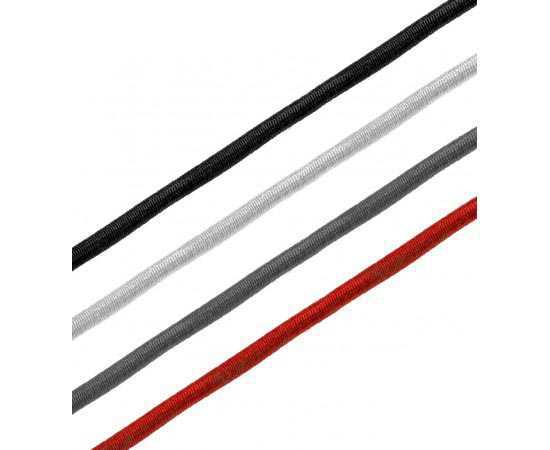
Strap
customizable
customizable

ESD Queue Control Post with Antistatic...
ESD queue control post , yellow powder-coated steel finish, strap with marking.
€115.20

Custom Belt Barriers
Clear Marking for Enhanced ESD Safety
In EPA (Electrostatic Protected Area) zones, physical demarcation is essential to ensure compliance with procedures and minimize risks related to electrostatic discharge.
Belt stanchions create clear and modular visual barriers. They facilitate access management, guide operators, and enhance the visibility of sensitive areas.
Combined with ESD floor marking, they provide a complete solution to organize your spaces, secure your processes, and improve flow in demanding technical environments.
Questions fréquentes
Do you have questions about ESD marking and the demarcation of sensitive areas? This FAQ helps you understand how to identify, organize and secure your EPA areas using suitable solutions such as floor markings and guide posts, to ensure a clear, structured and compliant work environment.
What is ESD signage used for?
ESD signage clearly identifies electrostatic discharge sensitive areas and protects electronic equipment. It facilitates compliance with procedures by visually marking EPA zones.
Are crowd control posts antistatic?
No, crowd control posts are not antistatic. Their role is to physically delimit ESD zones, control access and organize traffic flow around protected areas.
Why use posts to delimit an ESD zone?
Belt stanchions create a clear visual barrier around sensitive areas. They prevent unauthorized access and enhance spatial clarity in industrial or technical environments.
How to properly secure an EPA zone?
To secure an EPA zone, it is recommended to combine several elements: ESD floor marking, signage, access control and delimitation with stanchion posts. This combination ensures clear and effective organization.
In which environments should ESD barriers be used?
ESD barriers are used in sensitive environments such as electronics industries, laboratories, cleanrooms, production areas or technical workshops.
Can't find the answer to your question ?
ESD marking: protection of sensitive electronic areas
ESD marking (Electrostatic Discharge) encompasses signaling and delimitation devices designed for environments sensitive to electrostatic discharge: electronic production areas, cleanrooms, component assembly workshops, R&D laboratories. ESD surfaces and accessories must be conductive or dissipative (resistance between 10⁵ and 10⁹ Ω) to safely evacuate charges.
ESD product families
- ESD posts and straps: strap made of dissipative material, base connected to ground via grounding cable. Different from standard belt posts which are insulating.
- ESD floor marking: adhesive tapes in conductive version to delimit EPA zones (Electrostatic Protected Area).
- ESD signage panels: standardized pictograms (IEC 61340-5-1) to remind obligations at the entrance of a protected zone.
Standards and compliance
- IEC 61340-5-1: international reference standard for protection of electronic devices against electrostatic discharge.
- ANSI/ESD S20.20: equivalent American standard, commonly required by contractors in aerospace and medical sectors.
- Surface resistance: 10⁴ Ω < R < 10¹¹ Ω for dissipative materials; < 10⁴ Ω for conductors.
- All elements must be connected to a common grounding point (EBP - Equipotential Bonding Point).
Industrial applications
ESD marking is required for delimiting areas handling sensitive components (microelectronics, sensors, lithium batteries), for electronic board assembly areas, and for storage zones of equipment intended for critical environments (aerospace, defense, medical, automotive). For standard industrial environments, see our chain posts or guidance barriers.
They trust us