There are 4 products.

Sort by:

Questions fréquentes

Magnetic base stanchions address specific constraints related to installation and queuing flexibility. Their operation and usage differ slightly from standard posts, particularly regarding fixing and stability. This FAQ clarifies the essential points to consider before choosing this type of solution.
When should you use a magnetic base barrier post?
This type of post is used when drilling into the floor is not possible or desirable. It's particularly suitable for environments where crowd control barriers need to be installed quickly, moved regularly, or removed without leaving traces, such as logistics areas, industrial facilities, or certain commercial spaces.
What strap length should I choose based on my space configuration?
The choice of length depends on the distance to cover and the layout configuration. Certain lengths are better suited for confined spaces with dense crowd control setups, while others allow you to cover larger areas with fewer anchor points. The goal remains to ensure a clear pathway while maintaining good stability of the system.
Are magnetic base belt stanchions suitable for all floor types?
These stanchions require a metal surface to function properly. They are therefore suitable for environments equipped with steel structures or where a metal plate can be installed on the floor. On non-metallic surfaces, their use requires a complementary device to ensure proper adhesion.
Can the straps on this type of post be customized?
Depending on the models, it is possible to customize the straps to integrate specific visual elements. This can include information messages, safety instructions or traffic directions. This customization allows you to adapt the barrier system to the context of use while enhancing the readability of the marked areas.
What's the difference between a magnetic post and a standard base post?
The main difference lies in the fixing method. A standard post relies on a weighted base, while a magnetic model uses a magnetization system. This avoids the significant weight of a traditional base while ensuring effective hold when the installation conditions are met.
How do you install a magnetic base stanchion post?
Installation relies on positioning a metal surface, often in the form of a plate fixed to the floor. The post then positions directly on top thanks to its magnet. This implementation allows for quick installation, without heavy intervention or permanent modification of the support surface.
In which environments should this type of marking be used?
They are often used in technical, industrial or logistics environments, but may also be suitable for certain commercial or office spaces as long as an appropriate surface is available. Their main advantage lies in their ability to integrate into contexts where flexibility is a priority.

Can't find the answer to your question ?

Magnetic base stanchion: characteristics

The magnetic stanchion adheres to any ferrous surface via a neodymium magnet integrated into its base. No-drill solution ideal for industrial floors, metal plates, production halls. Usage and floor compatibility questions are addressed in the FAQ below; this section presents the technical criteria.

Adhesion force

The magnetic pull force is generally between 40 and 120 kg depending on the model. Below 60 kg, adhesion may give way to sustained lateral belt tension. Above 100 kg, displacement sometimes requires two people.

Technical criteria

  • Base diameter: 25 to 35 cm. The larger the base, the more distributed the adhesion.
  • Total height: 90 to 100 cm, identical to standard mobile models.
  • Magnet type: neodymium N42 or N52. N52 offers 20% more force but costs more.
  • Floor compatibility: ferrous steel only. Ineffective on stainless steel, aluminum, copper floors, and any non-ferromagnetic surface.
  • Floor protection: rubber or felt coating under the magnet to prevent scratching the floor when moving.

Safety

The stated pull force is measured perpendicular to the floor. Lateral force (typical of belt tension) only requires 10 to 20% of this force to slide the post. In high-traffic areas, supplement with fixed bollards or screw-down posts at strategic points.

They trust us

Best sellers

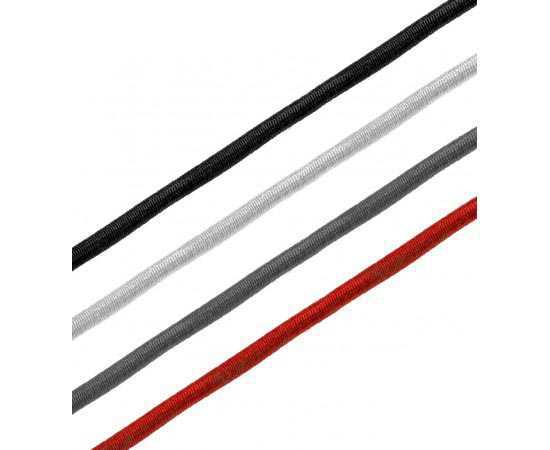
Cordelette élastique (Vendue au mètre)

Elastic Cord (Sold by the...

Elastic cord in black, white, red,...

€1.60

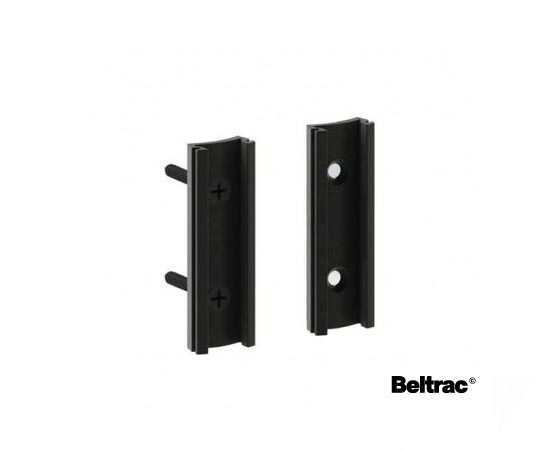
Récepteur de sangle mural Beltrac™

Beltrac™ Wall Receiver

Wall mounting accessory for...

€19.00

All best sellers
Filtrez notre catalogue de poteaux à sangle sur socle magnétique! (4 products)

Fabricant / Marque

Gamme

Matériau

Finition des poteaux

No choice available on this group

Longueur de la sangle/bande

Finition de la sangle

Hauteur de la sangle

Sangle auto-freinée

Poids

Hauteur totale

Prix

€195.00 - €420.00

Diamètre de la base

Diamètre du tube

Non discriminatoire et adapté aux PMR

Antistatique (norme ESD)

No choice available on this group

Utilisation en extérieur

No choice available on this group

Paiement