Industry-Specific Solutions
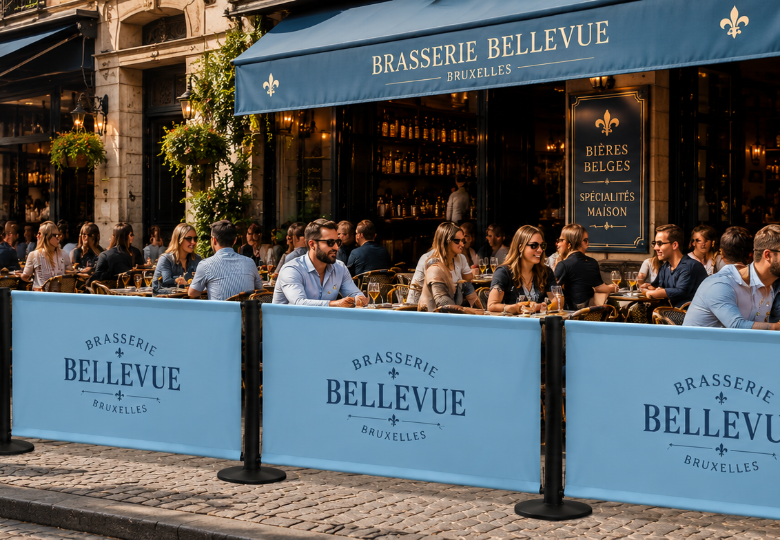
Café Patio Banners: Maximize Space & Visibility
Learn how strategic patio banners maximize your café's outdoor space while increasing...

Recevez en temps réel le statut de votre livraison

Queues in pharmacies directly impact patient satisfaction and operational efficiency. Discover best practices and solutions to optimise the customer experience in your pharmacy.
Queues are an unavoidable reality in pharmacies, particularly during peak hours. However, poor organisation can generate frustration, reduce customer satisfaction and negatively impact your establishment's reputation. According to industry surveys, patients typically wait between 8 and 12 minutes in pharmacy-a delay that can feel excessive if the waiting process is not well-structured.
Beyond customer experience, ineffective queue management creates internal inefficiencies: staff stress, service slowdowns and potential errors in prescription processing. Pharmacists and teams must balance the quality of advice, administrative accuracy and patient flow smoothness.
Investing in optimal queue organisation is therefore not a luxury, but a necessity to maintain service quality, patient safety and the financial performance of your pharmacy.
Before implementing a solution, it is essential to diagnose current issues. Each pharmacy has its own structure and challenges, but certain problems recur regularly.
To assess the situation, observe for a week: at what times are queues longest? How many service points are occupied simultaneously? What is the average time to process each patient? This data will allow you to size your organisational solution correctly.
💡 Tip: Use simple tools (observation sheets, stopwatch) or counting software to quantify peak periods. This data will justify your investments to management.
Good queue organisation rests on three pillars: visual clarity, customer journey fluidity and human resource optimisation.
Signage is the foundation of an orderly queue. Retractable stanchion posts allow you to create clear pathways and define waiting zones. Unlike rigid barriers, retractable belt stanchions offer flexibility valued in pharmacy settings:
Position posts to create a logical pathway: entrance → first queue → service counters. Avoid crossovers or confusing routes that slow flow.
Rather than a single queue, consider multiple channels based on service type:
This segmentation reduces average waiting time and improves satisfaction, as each patient follows a route matched to their actual needs.
Knowing your peak hours enables proactive planning:
Waiting is never pleasant, but it can be made more acceptable by improving comfort and engaging patients meaningfully.
Passive waiting feels longer. Offer:
📊 Research: Well-organised and communicated waiting feels 30% shorter than disorganised waiting of the same duration. Information and comfort play a decisive role.
Beyond physical signage, several technologies can modernise queue management in pharmacy.
Automated ticket dispensers streamline queue management. Patients receive a number, relax in the waiting area and are called when their turn arrives. Benefits:
Management software complements the ticket dispenser: it measures waiting times, spreads patients across the available counters and produces indicators on peak periods. That data is what lets you match staffing and layout to real footfall rather than to assumptions.
For consultations, vaccinations or collecting a pre-ordered prescription, booking moves the waiting outside the pharmacy. The queue gets shorter, the advice area gets quieter and the visit becomes predictable for the patient.
Good queue management in a pharmacy is rarely a question of floor space — it is a question of readability: a clearly marked waiting zone, an unambiguous route to the counter and a discreet spot for confidential conversations. Physical marking and digital tools complement each other: the first structures the space, the second controls the order of service.
Belt posts, wall-mounted units and accessories for a calm, clearly organised pharmacy.
View the products




Related posts
Learn how strategic patio banners maximize your café's outdoor space while increasing...
Discover proven strategies to manage queues effectively in public administration and...
Explore 5 concrete use cases of guidance posts in airports and how they enhance safety...
Compare brushed and polished steel guidance posts. Learn which finish suits your needs...
Master stand signage rules and best practices to maximize your exhibition impact and...