Industry-Specific Solutions
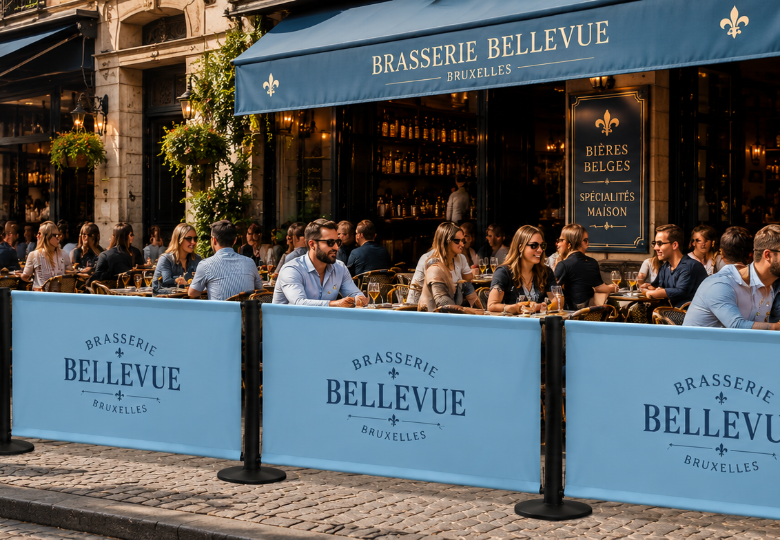
Café Patio Banners: Maximize Space & Visibility
Learn how strategic patio banners maximize your café's outdoor space while increasing...

Recevez en temps réel le statut de votre livraison

Optimise visitor flow and circulation on your exhibition stand through effective, compliant marking systems. Discover the essential standards and best practices for creating a secure, professional environment.
Stand marking and crowd control systems represent far more than aesthetic or decorative considerations. They are strategic elements that directly impact visitor safety, brand perception, and regulatory compliance of your installation. Whether hosting a B2B trade show, commercial exhibition, or public event, inadequate marking can create hazardous conditions, generate chaotic traffic flows, and diminish the visitor experience.
Event organisers and stand managers must master the essential principles of marking and crowd management to ensure a professional, safe environment that meets current standards and regulations. This article explores the fundamental principles, applicable regulations, and best practices that make a real difference in the field.
Stand marking encompasses all visual and physical elements designed to guide, inform, and protect visitors within an exhibition space. This includes guidance posts, barriers, ropes, signage, floor markings, and all devices that structure the space and manage traffic flow. Unlike simple decoration, marking fulfils a strategic and regulatory function.
Key takeaway: Effective marking is not an unnecessary expense-it is an investment in safety, compliance, and visitor satisfaction.
Across the UK and Europe, exhibition stand marking must comply with several regulatory frameworks. ISO 3864 defines safety symbols and standardised colours (red for prohibition, yellow for warning, green for safety information). These standards ensure universal understanding of safety messages, regardless of language.
Event organisers must also comply with accessibility regulations, particularly the Equality Act 2010 in the UK, which requires accessible routes for people with mobility impairments. This means passages of at least 1.2 metres width, freedom from unexpected obstacles, and appropriate signage.
Stands must incorporate clearly marked, unobstructed evacuation routes. Emergency exits, evacuation paths, and assembly points must be signalled in accordance with current standards. Marking systems must never obstruct access to fire extinguishers, fire doors, or emergency exits.
Each event has specific requirements that define acceptable marking practices. Before implementing your marking strategy, always consult the organiser's guidelines regarding maximum heights, permitted materials, colour schemes, and restricted marking zones.
Retractable barrier posts represent the most commonly used solution for exhibition stands. These systems combine effectiveness, flexibility, and ease of deployment. They enable you to create orderly queues, delimit specific zones, and manage traffic flows without creating permanent obstacles.
Retractable barriers offer the advantage of rapid deployment or retraction according to requirements. They are particularly suited to small and medium-sized spaces and can be customised with company colours or logos to reinforce stand identity.
Chains and rope barriers offer a lighter and more economical alternative to posts. They are ideal for delimiting zones without creating an imposing physical barrier. However, they provide less visibility and robustness, and are unsuitable for high-traffic environments.
Signage panels, directional arrows, and floor markings complement the physical marking system. They provide specific information (restricted areas, directions, warnings) and guide visitors intuitively. Floor markings are particularly useful for indicating pathways, waiting areas, and hazard zones.
For large stands or elevated areas, barriers and handrails provide physical protection against falls. They must comply with height standards (typically minimum 1.1 metres) and be securely fixed to withstand accidental impact.
Flexible and customisable, ideal for variable traffic patterns
Panels and arrows to guide visitors effectively
Physical protection for sensitive and elevated areas
Effective stand marking is not about multiplying barriers, but about placing them where decisions are made. A handful of rules is usually enough to keep visitors moving freely and to stop your team from having to direct traffic by hand.
Traffic density, aisle width and organiser requirements differ from one hall to the next. Review the stand plan and the event regulations before ordering, and keep some margin to adjust the layout after the first day of the show.
Well-designed stand marking does three jobs at once: it organises circulation, it protects exhibits and technical areas, and it reinforces your brand image. Treat it as part of the stand design, not as an accessory bought at the last minute.
Guidance posts, retractable belts, ropes and accessories for a stand that reads clearly from the first aisle.
View the products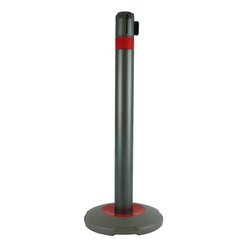


Related posts
Learn how strategic patio banners maximize your café's outdoor space while increasing...
Discover proven strategies to manage queues effectively in public administration and...
Explore 5 concrete use cases of guidance posts in airports and how they enhance safety...
Compare brushed and polished steel guidance posts. Learn which finish suits your needs...
Learn how to effectively manage patient queues in pharmacies and enhance their overall...