Industry-Specific Solutions
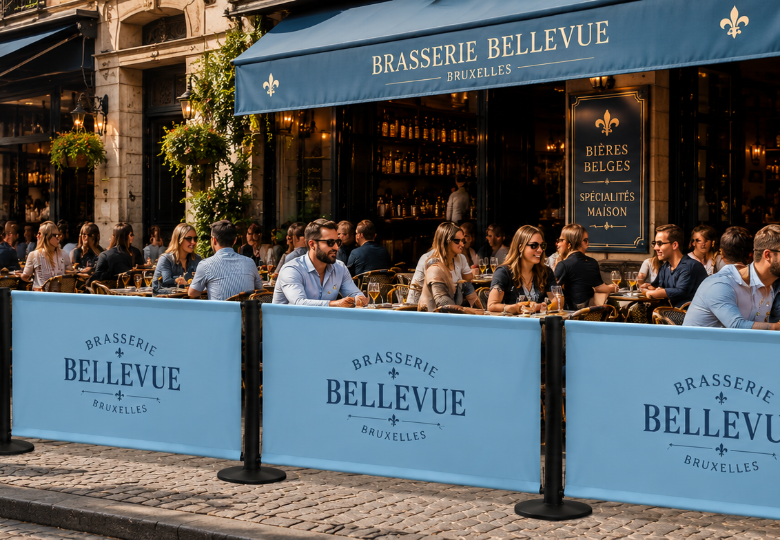
Café Patio Banners: Maximize Space & Visibility
Learn how strategic patio banners maximize your café's outdoor space while increasing...

Recevez en temps réel le statut de votre livraison
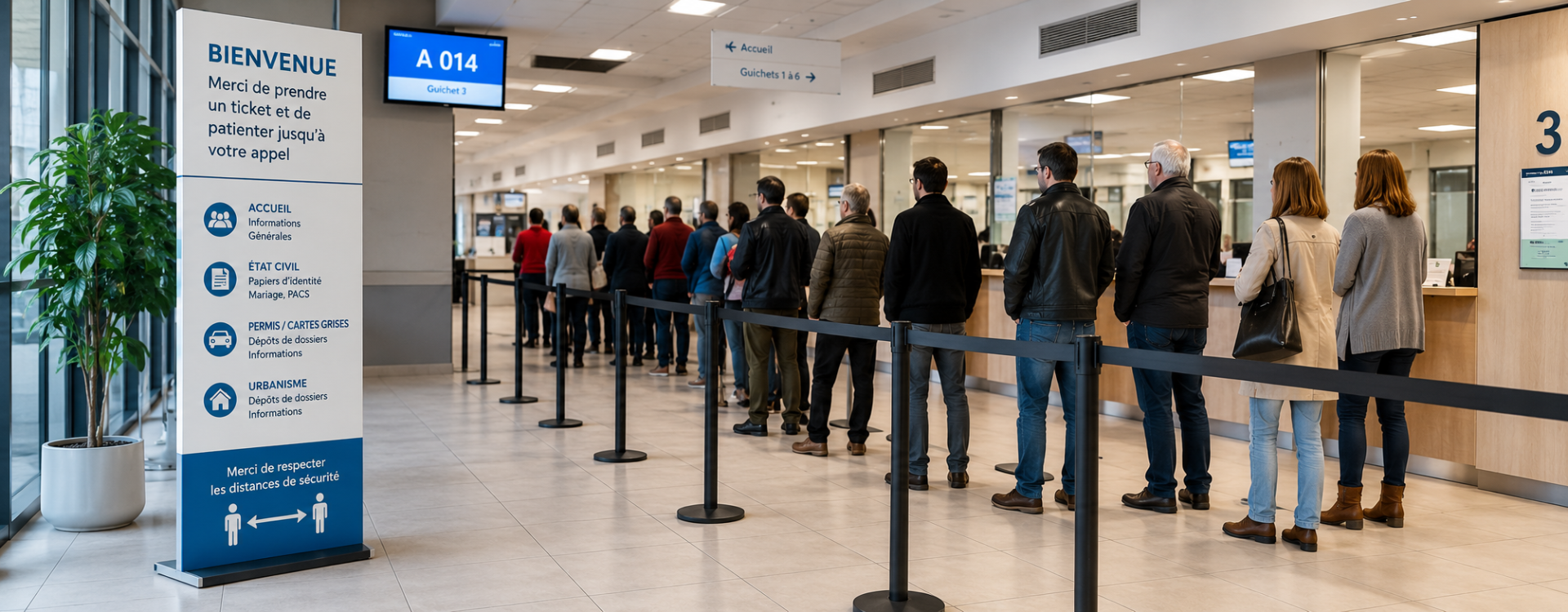
In public sector organisations, poor queue management creates frustration, confusion and wasted time for both service users and staff. Discover the methods and equipment that transform public service reception into a fluid, orderly and respectful experience.
Public sector organisations - local authorities, registry offices, benefit centres, tax offices, civil registration services and employment support agencies - welcome large and often unpredictable flows of service users daily. Unlike commercial environments, public services must meet strict obligations of equal treatment, dignity and accessibility for all. Queue management in public administration is therefore not simply an organisational matter: it is a fundamental public service responsibility. This article explores best practices, suitable equipment and proven strategies for optimising the reception of service users in administrative spaces.
Waiting is perceived differently depending on context. In a public service setting, it is often experienced as an unavoidable constraint rather than a choice. The service user who comes to renew their identity documents, submit an application or obtain information is already undertaking a mandatory task. If they must then wait for an extended period in a disorganised space, the experience becomes negative and potentially conflictual.
The consequences of poor queue management in public services manifest at several levels:
💡 Research conducted across several European countries shows that the perception of waiting time is reduced by 30 to 40% when the space is well organised, clearly marked and service users understand where to stand and when it will be their turn.
Investing in queue management equipment suited to public administration is therefore investing in the quality of service delivered to citizens.
Managing a queue in a public service organisation is not the same as managing one in a retail environment or at an event. The constraints are specific and should guide the choice of equipment and methods.
Public services welcome people of all ages, physical abilities and cultural backgrounds. Guidance equipment must therefore be accessible, legible and intuitive for everyone. Retractable belt barriers, for example, must be positioned so as not to create obstacles for wheelchairs or pushchairs.
Peaks in visitor numbers at public services can be linked to calendar deadlines (document renewals, tax periods, school holidays) or unexpected events. The queue management solution must therefore be flexible: the capacity should be adjustable quickly according to current demand.
In public services, every service user must be treated equally. The queue system must guarantee that order of arrival is respected, except for legal priorities (people with disabilities, pregnant women, etc.). Clear marking and suitable equipment allow these rules to be applied objectively.
The choice of equipment depends on the layout of your premises, the volume of service users and the type of service provided. Here are the main solutions used in public sector organisations.
The most widely used solution for creating flexible waiting corridors that can be reconfigured quickly according to visitor numbers.
Ideal for large waiting areas or outdoor spaces, they define stable and secure waiting zones.
For refined reception areas (town halls, government offices), they combine functionality with institutional aesthetics.
Essential for indicating service counters, waiting areas and instructions to follow, in multiple languages if necessary.
For further guidance on selecting equipment, consult our comprehensive guide on guidance and marking for queue management in professional spaces, which details selection criteria based on your environment.
When purchasing queue management equipment for a public service, several criteria should be considered:
Beyond equipment, the organisation of the space itself plays a decisive role in the quality of the waiting experience. Thoughtful layout can significantly reduce the perception of waiting time and limit tensions.
A well-organised public service space clearly distinguishes several zones: reception and orientation at the entrance, the main waiting area, service counters and possibly a document collection area. Each zone should be physically demarcated and clearly signposted.











Related posts
Learn how strategic patio banners maximize your café's outdoor space while increasing...
Explore 5 concrete use cases of guidance posts in airports and how they enhance safety...
Compare brushed and polished steel guidance posts. Learn which finish suits your needs...
Master stand signage rules and best practices to maximize your exhibition impact and...
Learn how to effectively manage patient queues in pharmacies and enhance their overall...