Industry-Specific Solutions
Café Patio Banners: Maximize Space & Visibility
Learn how strategic patio banners maximize your café's outdoor space while increasing...

Recevez en temps réel le statut de votre livraison

In a demanding environment like an airport, managing passenger flows is a major operational challenge. Discover how retractable belt stanchions address the everyday needs of airport infrastructure managers.
Airports rank among the most complex environments for managing human circulation. Thousands of passengers, staff members and visitors pass through each hour, across multiple-function spaces: check-in, security screening, customs, boarding, baggage claim… Each zone requires precise queue organisation and traffic flow to ensure both efficiency, safety and passenger comfort.
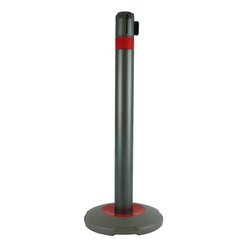
It is in this context that retractable belt stanchions have become an essential tool. Modular, robust, and available in both indoor and outdoor versions, they allow spaces to be structured quickly and effectively. This article presents five real-world use cases, drawn directly from the operational challenges faced by airport teams.
Before exploring specific use cases, it is important to understand what sets airports apart from other high-traffic venues such as train stations or shopping centres. Several factors make flow management particularly critical in this type of infrastructure:
Faced with these constraints, retractable belt stanchions offer an appropriate solution thanks to their ease of deployment, modularity and ability to integrate into varied space configurations. To explore the full range of available solutions, you can consult the complete range of belt stanchions offered by CrowdControlCentral.
Baggage check-in is one of the most stressful moments for passengers and one of the most complex to manage for ground staff. Check-in desks simultaneously handle multiple airlines, with flows that vary considerably depending on the time of day.
Retractable belt stanchions allow the creation of serpentine queue corridors (also called zigzag queues) that maximise the use of available space whilst maintaining clear order. Unlike fixed barriers, they can be repositioned in minutes to adapt capacity according to the number of open desks or expected passenger volume.
In this context, stanchions equipped with long belts (up to 3 metres) are particularly valued, as they allow large distances between each post and create flexible configurations without multiplying anchor points.
💡 Tip: some airports combine belt stanchions with integrated signage displays (totem or post-mounted panel) to directly indicate the airline, flight number or travel class, reducing enquiries to staff.
Security screening is a particularly sensitive zone in any airport. It must ensure orderly passenger flow, clearly demarcate the boundary between public and restricted areas, and allow security officers to respond quickly if needed.
Queue control stanchions allow visual and physical demarcation of access to screening gates. They guide passengers to control points in the correct order, prevent lateral overflow and facilitate the work of supervision staff.
In this type of zone, stainless steel or weighted-base stanchions are often preferred for their stability and professional appearance. Their robustness is essential in environments where they are continuously subjected to heavy passenger flows carrying hand luggage.
During peak hours, it is common to open additional lanes or close certain ones. The modularity of belt stanchions allows real-time configuration adjustments without requiring tools or specialist personnel. A single staff member can reconfigure an entire screening zone in less than ten minutes.
Boarding is a stage where priority management is essential. Passengers in wheelchairs, families with young children, business class travellers, frequent flyer programme members… each airline has its own priority boarding rules, and ground staff must ensure these are respected smoothly.
Create a dedicated queue for priority passengers, separate from the main queue, using stanchions positioned on either side of the jet bridge access corridor.
Organise multiple distinct queues according to boarding groups, allowing passengers to be called in waves and reducing congestion at the jet bridge entrance.
Guide passengers to shuttle buses by establishing a secure outdoor corridor, using stanchions suitable for external weather conditions.
The flexibility of belt stanchions is particularly valuable here: a single boarding gate can handle multiple flights in one day, with different boarding configurations depending on the airline. Staff can reconfigure the space between flights without difficulty.
The baggage claim hall is often underestimated in terms of queue management requirements. Yet it is a space where tensions can quickly escalate: passengers are tired, in a hurry, sometimes anxious about their luggage, and they gather in large numbers around limited carousel space.
Positioning stanchions around baggage carousels creates a controlled access zone and prevents passengers from crowding or obstructing the carousel area. This improves both safety and visibility, allowing everyone to see their luggage without struggling through crowds.
```











Related posts
Learn how strategic patio banners maximize your café's outdoor space while increasing...
Discover proven strategies to manage queues effectively in public administration and...
Compare brushed and polished steel guidance posts. Learn which finish suits your needs...
Master stand signage rules and best practices to maximize your exhibition impact and...
Learn how to effectively manage patient queues in pharmacies and enhance their overall...