




Crowd Control & Signaling Colors: What Does Each Color Mean?
Crowd Control & Signaling Colors: What Does Each Color Mean?
From alarm red to safety green, every color follows a precise international code. Understanding these conventions optimizes your crowd management systems, reduces accidents and improves visitor flow — at events, in warehouses or any public space.
Red stanchion belts, yellow warehouse tape, green emergency exit signs — none of this is accidental. Behind each color choice lies a universal language, codified by ISO and EN standards, adopted across industries from aviation to luxury hospitality.
In this complete guide, we break down every signaling color code, explain its legal and practical implications, and show how to apply it to your stanchion systems and crowd control equipment.
1. Reference Standards: ISO 3864 and EN ISO 7010
ISO 3864-1: General Principles
Defines the four safety colors (red, yellow, green, blue) and their associated geometric shapes. Applicable to all safety signs regardless of the country's language.
EN ISO 7010: Safety Pictograms
Harmonized European standard cataloguing all safety pictograms (emergency exit, fire extinguisher, no smoking…). Mandatory in all European public buildings since 2014.
National Standards
NEN 3011 (Netherlands), DIN 4844 (Germany), BS 5499 (UK) — broadly aligned with ISO 3864, with local specificities to know if operating in those markets.
2. Red: Prohibition, Immediate Danger & Fire Safety
- Fire equipment: extinguishers, fire hose reels, manual call points
- Prohibition signs: no entry, no smoking, authorized personnel only
- Emergency stops: STOP buttons, power cutoffs, machine safety devices
- Critical danger zones: perimeters closed to the public
In crowd management, red belts subconsciously signal "do not cross" — ideal for event security systems, VIP access and staff-only areas.
3. Yellow & Orange: Warning and Caution
- Warehouse floor marking: separating forklift lanes from storage areas
- Construction cones and delineators: roadworks, obstacles, temporary zones
- Warning belts: wet floors, stairs, uneven surfaces
- Temporary evacuation routes: high contrast against dark exhibition hall floors
Note: alternating yellow-black stripes denote a permanent hazard or fixed obstacle. This combination is regulated — do not use decoratively.
4. Green: Safety, First Aid & Evacuation Routes
- Emergency exits and evacuation routes (ISO 7010 E001 — mandatory in public buildings)
- First aid stations: first aid kits, AEDs, safety showers
- Safe assembly areas for evacuation waiting zones
- Priority queues: wheelchair access, families with children
In museums and cultural venues, green belts intuitively guide visitors toward permanent collections or guided tour starting points.
5. Blue: Obligation, Information & Direction
Mandatory Signs
Mandatory PPE, one-way traffic, handwashing. Circular shape + white pictogram on blue background.
Information Signs
Directional panels in hospitals, airports, stations. Toilet, parking, elevator pictograms commonly use blue.
Event Crowd Control
At conferences and trade shows, blue belts define registration and reception areas — a professional tone that inspires confidence.
6. White, Black & Neutrals: Direction and Prestige
- White: pedestrian lane lines, directional sign backgrounds, clean work zone markings
- Black: premium event boundaries, luxury hospitality, upscale retail
- Stainless / aluminium: discreet post finishes suited to modern interiors
- Gold / burgundy: VIP velvet rope, five-star hotels, gala events and red carpets
The black/gold or white/chrome combination on velvet rope stanchions is the hallmark of prestige crowd control — perfect for galas, corporate evenings and luxury boutiques.
7. Sector Applications
✈ Airports & Stations
Yellow at baggage claim, blue toward boarding gates, red for restricted zones. Black or burgundy belts at premium passport control lanes. See our airports & stations guide.
Museums & Galleries
Red velvet for artworks (classic museum atmosphere), midnight blue for contemporary spaces. Custom printed belts matching the institution's brand colors.
Events & Trade Shows
Red = staff only, yellow = general public, green = press, blue = VIP. A clear color code reduces confusion and speeds up access control checks.
Healthcare
Each facility develops its own code: green for A&E, blue for surgery, yellow for infection-risk zones. Stainless steel posts preferred for hygiene and ease of disinfection.
Warehouses & Industry
Yellow/black floor marking for forklift lanes, red to isolate dangerous zones, orange for loading/unloading areas.
Retail & Commerce
Belts in brand colors reinforce the customer experience through to the checkout queue — a detail seen by 100% of customers.
8. Five Golden Rules for Effective Color Coding
① ISO Standards First
In public buildings, using red for anything other than danger/prohibition is a legal breach. Follow ISO 3864 even if it conflicts with your brand colors.
② Maximum 3 Colors Per Area
Beyond 3 colors in one space, the coding loses legibility. Define a simple reference and document it for your operational teams.
③ Consider Floor Contrast
A yellow belt on a light floor is hard to read. On grey concrete or asphalt it stands out perfectly. Choose colors based on the actual installation environment.
④ Color-Blindness Accessibility
8% of men confuse red and green. Always pair a pictogram or text with the color so the message remains clear for all visitors.
⑤ Brief Your Staff
The color code only works if staff understand it. Include it in the pre-event briefing and post a summary chart in control areas.
Related Articles
Signaling colors are tools of silent communication that directly influence visitor behavior, venue safety and your organization's image. By following ISO standards and adapting your color code to your sector, you build an environment where flows regulate naturally.
Need a Custom Color-Coded Crowd Control System?
Our experts help you choose the right colors for your sector and build a coherent, standards-compliant system. Free quote within 24 hours.
Request a Quote Browse ProductsRelated products
-

Stainless Steel Rope Post BSR Series, Silver Grey
Price: €98.00Stainless steel rope post BSR with silver grey finish, understated and... -

-

Black Belt Queue Post ECO with 3m Retractable Strap
Price: €89.15Queue guidance post with 3m belt, black finish. -

White Barrier Post - Potelet
Price: €132.55Retractable belt post 300cm, 370cm or 500cm, white lacquered. -

Chrome Stainless Steel Queue Post - Potelet
Price: €196.25Belt barrier post 300, 370 or 500cm "Potelet®", chrome finish (Polished... -

-

Blue Stainless Steel Barrier Post - Potelet
Price: €280.55Blue belt barrier post with retractable belt 3m, 3.7m or 5m. -

Yellow Queue Control Post - Potelet
Price: €181.65Yellow guidance post with retractable belt 3m, 3.7m or 5m. -

Pink Queue Control Post - Potelet
Price: €200.00Pink lacquered queue control post. Various belt colors 2.5m, 3.2m or 3.7m. -

Brushed Stainless Steel Queue Post - Potelet
Price: €179.55The brushed stainless steel delimitation post with 3m, 3.7m or 5m belt. -

Silver Stainless Steel Guidance Post - Potelet
Price: €132.55Silver gray barrier post for professional crowd control. Multiple belt... -

Wall Mount Retractable Belt Unit - Potelet
Price: €75.85Compact belt retractor 3m, 3.7m, 5m. Screw or magnetic mounting. -

Premium Intervention Barrier Kit with Transport Cart
Old price: €3,724.00 Price: €3,351.60 Discount: 10% Save up: -€372.40Transport cart including 25 emergency intervention barrier posts! -

Golden Ball-Top Rope Post
Price: €108.00Golden rope post (compatible ropes to be ordered separately). -

-

-

-

ESD Queue Control Post with Antistatic Protection
Price: €115.20ESD queue control post, yellow powder-coated steel finish, strap with marking. -

ESD Barrier Post with Double Retractable Belts
Price: €168.40ESD barrier post equipped with two retractable belts, yellow powder-coated... -

Black Stainless Steel Fixed Guide Post - Potelet®
Price: €112.00With its elegant matte black finish and stainless steel construction, this... -

Black Elastic Rope Barrier Post
Price: €77.00Elastic rope barrier post (H. 45cm) for creating barriers or delimiting spaces. -

Wall Mount Belt Retractor 3m - Potelet
Price: €61.90Retractable wall belt barrier 3m, customizable options available. -

Black Retractable Belt Stanchion - Potelet MASTER LIMIT
Price: €118.55Crowd control stanchion with retractable belt 300cm, 370cm or 500cm, multiple... -

Wall Terminal for Rope Barriers
Price: €33.50Wall terminal for Potelet® cords. Chrome or gold finish. -

Black Rope Guidance Post - 4-Way Design Series
Price: €97.00Black rope post with flat top, multi-directional design. -

Stainless Steel Rope Barrier Post (Silver Grey)
Price: €97.00Guidance post for ropes, flat top 4 directions, in stainless steel. -

Chrome Rope Barrier Post (Mirror Finish)
Price: €158.45Chrome rope barrier post in stainless steel (polished mirror finish), (rope... -

Stainless Steel Rope Barrier Post (Brushed Finish)
Old price: €158.45 Price: €142.61 Discount: 10% Save up: -€15.85Guide post with brushed stainless steel finish, for Potelet® ropes. -

Compact White Elastic Cord Post
Price: €77.00Potelet® crowd control post in white powder-coated steel. -

Compact Black Stainless Steel Queue Post with Strap
Price: €135.35Compact queue post (H 45cm) in black painted stainless steel, 300cm strap... -

Compact Retractable Belt Stanchion, Silver Grey
Price: €165.35Retractable belt stanchion (H 45cm) in stainless steel, silver grey finish,... -

-

Red/White Barrier Tape
Price: €3.48Red/white barrier tape roll in 5cm x 100m or 7cm x 500m formats. -

Adhesive Warning Tape Yellow/Black (33m)
Price: €8.58Yellow/black adhesive warning tape for floor marking applications. -

Black Belt Stanchion with X-Base, Potelet MAX
Price: €142.00Stable and practical belt stanchion thanks to its stackable X-base! -

Wall Mount Belt Retractor (12m or 22m), Aluminum (Beltrac)
Price: €330.00Wall-mounted belt retractor with 12 or 22m belt for indoor or covered outdoor... -

Long Range Wall Mount Belt Retractor (12m or 22m), Black (Beltrac)
Price: €315.00XXL wall belt retractor (12 or 22m!) from the Beltrac™ range, suitable for... -

Museum Brushed Stainless Steel Rope Post
Old price: €190.80 Price: €171.72 Discount: 10% Save up: -€19.08Elegant rope post with brushed stainless steel finish, to be paired with... -

Black Magnetic Base Queue Barrier Post - Potelet MAGNETIC
Price: €201.00Retractable belt post on magnetic base, black (Various belt lengths and... -

Professional Event Post with Golden Ball Top
Price: €104.00Ball-top guidance post, conical base, golden finish, for ropes. -

Retractable Belt Stanchion Securit™
Price: €95.00Securit™ extendable and retractable belt stanchion, 210cm belt, brushed... -

CLASSIC Queue Management System Black, Beltrac™
Price: €214.80Beltrac retractable belt post, black finish. Various belt colors available. -

Queue Control Post CLASSIC Anthracite, Beltrac™
Old price: €214.80 Price: €193.32 Discount: 10% Save up: -€21.48Beltrac queue control post, premium solution, anthracite finish. -

Queue Management Post CLASSIC Chrome, Beltrac
Old price: €224.40 Price: €201.96 Discount: 10% Save up: -€22.44Queue management post for queues Beltrac, chrome finish. -

Wide Belt Queue Post 10cm Chrome BELTRAC Extend
Old price: €263.00 Price: €236.70 Discount: 10% Save up: -€26.30Aluminum queue management post with wide belt (10cm height!). -

BELTRAC Queue Management Post CLASSIC Red
Old price: €179.00 Price: €161.10 Discount: 10% Save up: -€17.90The red painted aluminum queue management post "Beltrac", premium solution! -

BELTRAC OUTDOOR Weatherproof Queue Post (Black)
Old price: €125.00 Price: €106.25 Discount: 15% Save up: -€18.75Outdoor queue post designed for exterior use, PVC plastic tube, fillable base. -

Wide Belt Queue Post 10cm Black Extend
Old price: €320.40 Price: €288.36 Discount: 10% Save up: -€32.04Queue guidance post (Black painted aluminum) with 10cm belt. -

Luxor Chrome Rope Post 95cm with 4-Way Cup
Old price: €152.40 Price: €137.16 Discount: 10% Save up: -€15.24Luxor Beltrac chrome rope post for elegant queue management. -

-

Beltrac Wall Mount for Rope
Price: €11.50Wall mount for fixing Beltrac ropes, chrome, brass or brushed finish. -

Polished Chrome Ball-Top Rope Post
Old price: €172.80 Price: €155.52 Discount: 10% Save up: -€17.28"Crown" rope post, ball top (Polished chrome finish). -

Wooden Rope Post, Premium Maple Finish
Price: €201.60Wooden guidance post, chrome base, original and elegant design. -

-

Brass Ball-Top Rope Post Crown Series
Old price: €172.80 Price: €155.52 Discount: 10% Save up: -€17.28Beltrac Crown brass rope post with decorative ball top. -

Chrome Rope Guidance Post Professional
Old price: €114.00 Price: €102.60 Discount: 10% Save up: -€11.40Guidance post from the Beltrac Style range. High quality, lowest price! -

Brass Rope Guidance Post Premium
Old price: €127.20 Price: €114.48 Discount: 10% Save up: -€12.72Guidance post for hemp, velvet or polypropylene Beltrac ropes. -

Extend Magnetic Chrome Retractable Belt Barrier
Price: €348.00Chrome Beltrac Extend Magnetic barrier post with 370cm retractable belt. -
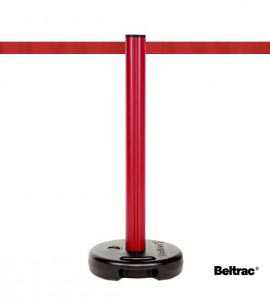
Outdoor Queue Post (Red) - BELTRAC OUTDOOR
Old price: €124.80 Price: €106.08 Discount: 15% Save up: -€18.72Red PVC post designed for outdoor use, with weighted base. -

Outdoor Guidance Post (Yellow) - BELTRAC OUTDOOR
Old price: €124.80 Price: €106.08 Discount: 15% Save up: -€18.72Fillable barrier post for outdoor use, in yellow color. -

JetTrac Dual Belt Stanchion 2×22m (Black)
Price: €1,740.00Dual belt reel post, 2×22m. Black finish. -

Yellow Plastic Wall Mount Belt Retractor (3m) - BELTRAC SAFETY
Price: €82.00Plastic retractor unit, 3m belt. Multiple belt colors available. -

Black Dual Belt Guidance Post MASTER LIMIT
Price: €212.15Black Potelet® DUAL guidance post with dual belts (customizable). -

Orange Barrier Post (RAL2003) - Potelet
Price: €132.55Fully colored orange barrier post, 3-3.7-5m belt. -

Chrome Stainless Steel Post with Magnetic Base, 3m Belt
Price: €227.00Chrome post (polished stainless steel) with 3m or 3.7m retractable belt, on... -

EXTEND Double Belt Magnetic Post (Polished Chrome)
Price: €408.00BELTRAC dual belt barrier post with 370cm belts on magnetic base. -

Blue Queue Management Post CLASSIC, Beltrac™
Old price: €214.80 Price: €193.32 Discount: 10% Save up: -€21.48Blue BELTRAC queue management post, 230cm belt, mobile weighted base. -

PURE Belt Stanchion Matte Silver
Old price: €132.00 Price: €118.80 Discount: 10% Save up: -€13.20Premium PURE belt stanchion 2m reach, indoor use. Multiple belt colors... -

Exhibition Belt Stanchion Brushed Steel (Low Profile)
Price: €195.60Guidance belt stanchion 230cm in brushed steel. Heavily weighted. -

Red Dual Belt Guidance Post with Double Retractable Straps
Price: €152.15Guidance post with flat base, red finish and dual 300cm retractor. -

White Dual Belt Guidance Post
Price: €212.15Dual retractable belt post 3m, white lacquered. Multiple belt color options. -

Golden Rope Post - Luxor Premium
Old price: €172.80 Price: €155.52 Discount: 10% Save up: -€17.28Luxor Beltrac golden brass rope guidance post. -

White Lacquered Queue Post CLASSIC, Beltrac™
Old price: €214.80 Price: €193.32 Discount: 10% Save up: -€21.48White lacquered BELTRAC queue post, 230cm belt, flat base. -

Wide Belt Queue Post 10cm Chrome Brushed Extend
Old price: €328.80 Price: €295.92 Discount: 10% Save up: -€32.88Aluminum queue post with wide belt, brushed chrome finish, conical base. -

Chrome Mirror Finish Belt Stanchion - ACCENT
Price: €224.40Chrome mirror finish belt stanchion with flat base and 2.3m belt. -

Yellow Dual Belt Guidance Post MASTER LIMIT
Price: €152.15Yellow colored guidance post, with flat base, and dual retractable belt 3m. -

Blue Dual Belt Guidance Post
Price: €114.15Guidance post with flat base, blue finish and dual 300cm belt dispenser. -

ESD Anti-Static Barrier Post DUAL Fixed Base
Price: €180.40ESD guide post equipped with two retractable 250cm straps, yellow finish. -

-

Belt Stanchion MODERN (Black)
Old price: €225.60 Price: €203.04 Discount: 10% Save up: -€22.56Belt guidance post with retractable 230cm belt (Black) "BELTRAC MODERN". -
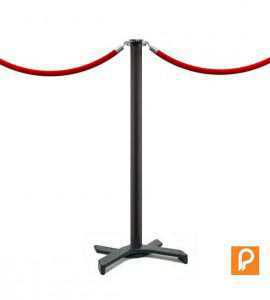
Rope Post with X-Base Stand (Black)
Price: €127.00Rope post, black finish, multidirectional flat top. -

Wide Belt Stanchion 10cm Red Extend
Old price: €320.40 Price: €288.36 Discount: 10% Save up: -€32.04Red post with wide belt (10cm) 3 meters long, conical base. -

Black Rope Barrier Post LINE Series - 90cm Steel
Price: €107.00Black delimitation post with double rope. -

X-Base Belt Stanchion (Silver Grey), Space-Saving Design
Price: €149.00Space-saving belt stanchion with stackable X-shaped base design. -

Compact Chrome Stainless Steel Rope Post (45cm)
Price: €135.00Compact rope post (H 45cm) 100% polished chrome stainless steel, 100% made in... -

White Lacquered Rope Post LINE Series
Price: €107.00White lacquered finish rope post with dual cord capability. -

-

Retractable Belt Barrier Post (Bolt Down) - BELTRAC CLASSIC CHROME
Price: €219.60Premium BELTRAC belt post, CLASSIC range, bolt-down installation. -

Belt Barrier Post (Bolt Down) - BELTRAC CLASSIC BLACK
Price: €211.20High quality guidance post (BELTRAC), CLASSIC range, for permanent installation. -

Chrome Ball Top Rope Post for Permanent Installation
Price: €168.00Chrome rope guidance post with ball top, for permanent ground installation. -

Chrome Belt Post for Concrete Installation - Extend
Price: €286.80Chrome belt post for concrete installation, ideal for permanent crowd control! -

Removable Ground Mount Rope Post - Luxor Chrome Finish
Price: €147.60Premium removable ground mount rope post with mirror chrome finish. -

Modular Tempered Glass Barrier Panel
Price: €351.00Element composed of aluminum profiles and tempered safety glass infill. This... -

-

Retractable Wall Delimitation Belt 7 or 10m
Price: €117.507 or 10m wall delimitation belt with automatic retraction. -

MODERN Brass Belt Stanchion (Premium Gold)
Old price: €312.00 Price: €280.80 Discount: 10% Save up: -€31.20Guidance belt stanchion 2.3m brass finish from the Modern Beltrac™ range. -

Wall Mount Belt Retractor 5m
Price: €68.00Delimitation belt in plastic housing, screw mounting, belt: 5m. -

10cm Wide Belt Wall Mount Retractor 380cm
Price: €94.00An essential element for easily blocking a passage or corridor from wall to... -

One-time machine setup fee for custom belt printing design
Price: €54.00One-time machine setup fee for custom visual printing. -

Wide Belt Barrier Post with 47cm High Strap
Price: €320.00Budget-friendly crowd control barrier with wide 47cm high strap for truly... -

-
-

Wall Mount XL Belt Retractor - Beltrac
Price: €236.00The Wall Mount XL belt retractor integrating a long retractable belt of 5.4m. -

Wall Mount Belt Retractor - Beltrac
Price: €96.00Wall mount retractable belt 230cm or 370cm. Beltrac available in various... -

Recessed Belt Retractor with Customizable Belt - WALL FIX
Price: €69.00Recessed wall retractor with customizable belt in different sizes. -

-

Wall Mount Strap Receiver
Price: €14.00Wall mount strap receiver by Potelet®. Allows fixing the end of a strap... -

Beltrac™ Wall Receiver
Price: €19.00Wall mounting accessory for receiving Beltrac™ straps on walls or flat surfaces. -

Wall-mounted Skipper™ receiver, screw-on or magnetic
Price: €24.20Wall-mounted receiver for Skipper belts. -
-

-

Magnetic Wall Mount Kit
Price: €36.90Free yourself from traditional mounting methods and opt for the practicality... -

-

LINE Series A4 Display Holder
Price: €74.50A4 display holder for LINE series museum barrier posts (post to be ordered... -

Sign Frame Holder for BELTRAC Rope and Belt Barrier Posts
Price: €72.00Chrome poster holder compatible with BELTRAC rope barrier posts. -

-

Related posts
-
 Outdoor Stanchion Post: Complete Guide, Materials and Applications
Complete guide to outdoor stanchion posts: material comparison (304/316 SS, aluminium, powder-coated), applications...Read More
Outdoor Stanchion Post: Complete Guide, Materials and Applications
Complete guide to outdoor stanchion posts: material comparison (304/316 SS, aluminium, powder-coated), applications...Read More -
 Custom Belt Stanchion: Turn Your Queues into a Brand Communication Space
Everything about custom belt stanchions: print options (logo, Pantone, full length), brand benefits, sector...Read More
Custom Belt Stanchion: Turn Your Queues into a Brand Communication Space
Everything about custom belt stanchions: print options (logo, Pantone, full length), brand benefits, sector...Read More -
 5m Belt Stanchion Post: Complete Guide, Uses and Configuration Tips
Everything about the 5m belt stanchion post: comparison with standard, 6 use cases, post calculation, technical specs...Read More
5m Belt Stanchion Post: Complete Guide, Uses and Configuration Tips
Everything about the 5m belt stanchion post: comparison with standard, 6 use cases, post calculation, technical specs...Read More -
 Wall Receiver for Stanchion Post: Complete Guide, Types and Installation
Everything about the wall receiver for stanchion posts: how it works, standard vs magnetic type, finishes, typical...Read More
Wall Receiver for Stanchion Post: Complete Guide, Types and Installation
Everything about the wall receiver for stanchion posts: how it works, standard vs magnetic type, finishes, typical...Read More -
 Customizing Guidance Posts and Straps: All Your Options
Custom stanchions with branded belts, printed text, and premium post finishes. Match your brand identity across every...Read More
Customizing Guidance Posts and Straps: All Your Options
Custom stanchions with branded belts, printed text, and premium post finishes. Match your brand identity across every...Read More